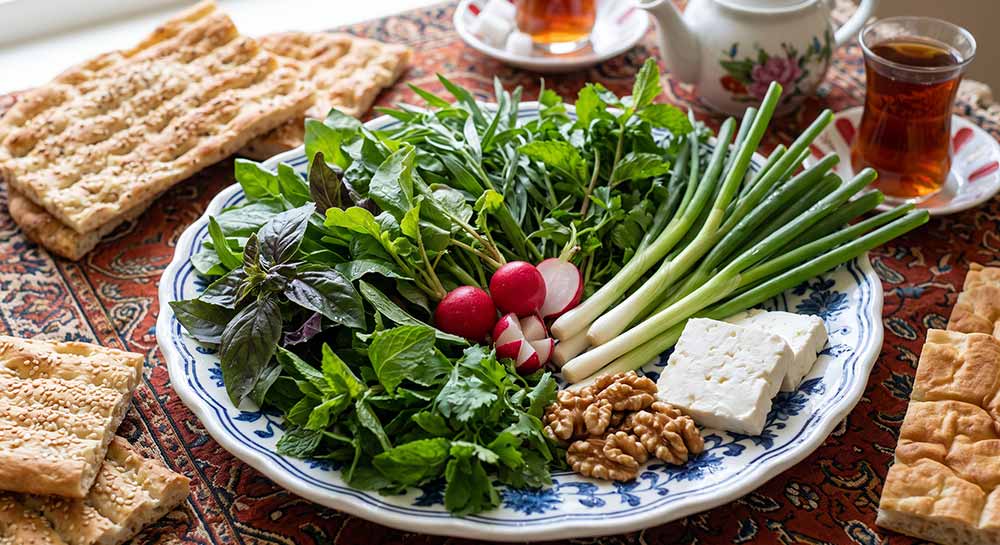
Sabzi Khordan might seem like the simplest part of an Iranian feast at first glance just a plate overflowing with fresh, untamed green herbs and crimson radishes, served raw without any cooking, dressing, or seasoning. Yet, in the rich tapestry of Persian culinary history, this vibrant plate is far more than a mere side dish. It is a multi-millennia-old tradition, a masterpiece of botanical pairing, and truly an “edible bouquet” that breathes life into the table. While many cultures around the world consume their greens cooked, or as mixed salads heavy with oils and dressings, Iranians prefer to bring their aromatic herbs to the table in their most natural, raw, and living form. What is the secret behind this everlasting companionship? Let’s explore the cultural and biological wonder of Sabzi Khordan.
Philosophy and History: Bringing the Garden to the Feast
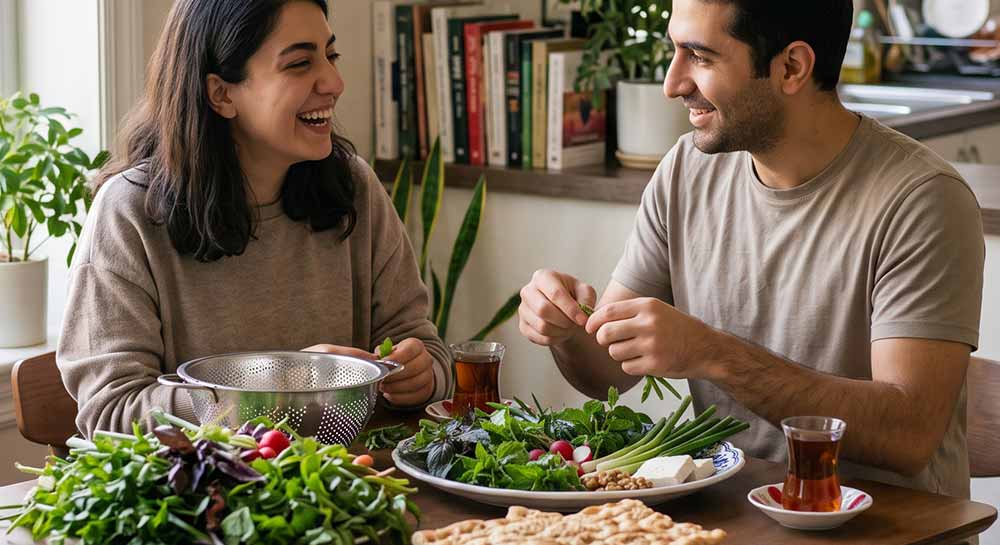
The ritual of serving and eating Sabzi Khordan (which literally translates to “eating greens”) stems from the ancient Iranian view of nature, where plants were not just sustenance but symbols of blessing, renewal, and immortality. Historically, Iranians learned that every warm, hearty, and fat-rich meal like skewers of kabab or slow-simmered stews required a refreshing, “tempering” counterpart to balance the body’s state. To this day, preparation is a cherished communal affair. “Pak kardan-e sabzi” (the act of cleaning and sorting the herbs) is one of the most nostalgic domestic scenes in Iran family members sitting together, gossiping and laughing as the scent of crushed stems and leaves fills the air. Placing this fresh plate on the table is like bringing a piece of a spring garden directly into the home.
The Aromatic Orchestra: Every Leaf Has a Story
A authentic plate of Sabzi Khordan is a brilliantly curated ensemble of contrasting tastes, textures, and aromas:
- Rayhan (Basil): The sweet, intensely aromatic king of the plate, revered for its digestive and calming properties.
- Nana (Mint): Cool, brisk, and peppery, crucial for neutralizing rich foods.
- Tarkhon (Tarragon): Bold and slightly anise-like, awakening the appetite.
- Marzeh (Summer Savory): A spicy, thyme-like herb with a very “warm” nature in traditional medicine.
- Torobcheh (Radish): Crisp, peppery, and red-skinned, offering a delightful crunch and color.
- Shahi (Watercress) & Tareh (Garlic Chives): Sharp and pungent, giving the bite an earthy punch.
- Gishniz & Jafari (Coriander & Parsley): Earthy, mild, and packed with vitamins.
Ancestral Wisdom: The Biome on Your Plate
From the perspective of traditional Persian medicine (Teb-e Sonati), Sabzi Khordan is a small, natural pharmacy. Most Persian staples like Abgoosht (stew) or Chelo Kabab are incredibly rich. The high fiber, live enzymes, and natural essential oils in these raw herbs don’t just make the meal taste better; they aid in metabolism and act as natural palate cleansers. Chewing a leaf of basil or mint between bites of savory meat clears your taste buds, allowing you to experience the next bite as if it were your first. It is an intuitive, ancient form of sensory engineering.
The Ritual: How to Eat Your Greens
No one ever eats Sabzi Khordan with a fork. It is an entirely hands-on experience. The peak of this ritual is making a “Loghmeh” (the perfect bite). You tear a piece of warm, flatbread (like Sangak), spread a piece of salty feta-like cheese (such as Lighvan), and pack it with a generous, fragrant handful of these raw herbs and a crunchy radish. This simple pocket is at once the humblest and the most regal appetizer in Persian gastronomy.
A Living Tradition
The humble plate of Sabzi Khordan reminds us that the finest culinary experiences do not always require complex cooking; sometimes, they lie in the absolute simplicity of celebrating what the earth provides. It is the signature of the Persian table, an edible guarantee of freshness and togetherness.