

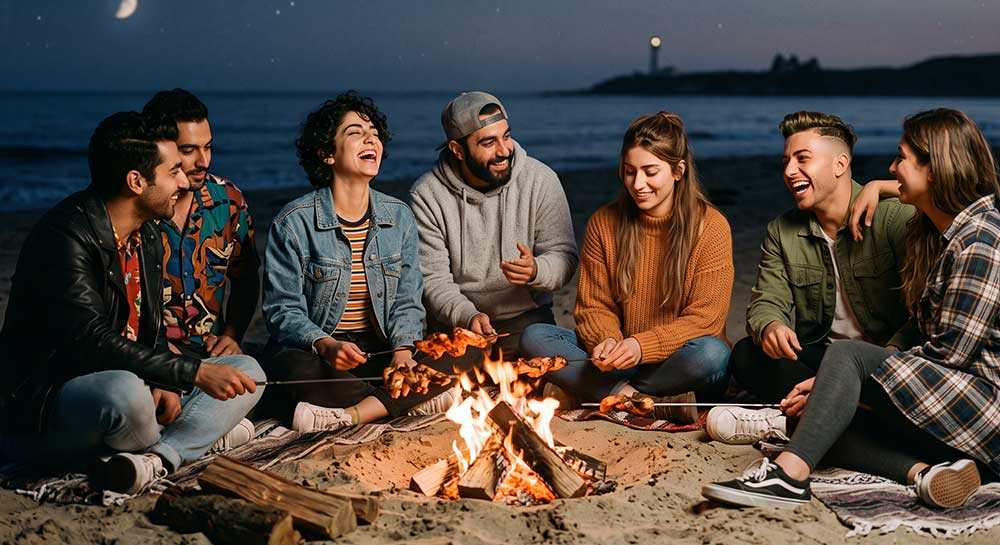
If you ask an Iranian to picture the perfect weekend or a flawless road trip, the answer usually revolves around one essential cultural tradition: Kabab-Bazi. In Persian culture, grilling meat over an open fire is far more than just a basic cooking method to cure hunger. Kabab-Bazi is a deeply rooted social ritual, an excuse to gather, and a joyous celebration of food and family. In Iran, lighting the charcoal fire and skewering the meat is the beating heart of any party, picnic, or travel itinerary. But what exactly makes Kabab-Bazi so sacred, nostalgic, and universally beloved across generations? Let’s dive into the smoky, flavorful world of this Persian BBQ phenomenon.
The Philosophy Behind Kabab-Bazi and the Traditional Manghal
Unlike an indoor kitchen where one person usually cooks alone, the “Manghal” (the traditional Persian charcoal grill) is always set up outdoors whether in a lush yard, on a small apartment balcony, or deep in nature. The space around the grill becomes an instant social hub. This is where family members gather, drink freshly brewed Persian tea, and engage in passionate debates about politics, art, or sports. During Kabab-Bazi, people jokingly argue over who is the absolute best at fanning the coals. The grill is not just a cooking station; it is a warm incubator for intimacy, laughter, and lifelong friendships.
Why Kabab-Bazi is Mandatory for Every Persian Road Trip
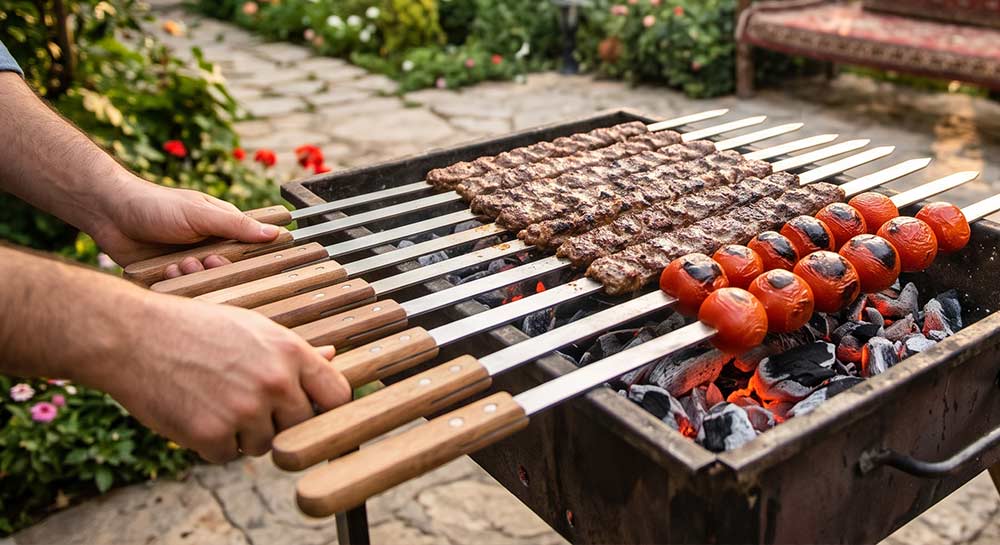
No road trip in Iran whether driving through the misty, green roads of the Caspian coast or navigating the vast central deserts is ever complete without the proper gear for Kabab-Bazi. If you look inside the trunk of almost any Iranian family’s car, you will inevitably find a portable metal grill, a heavy bag of charcoal, a woven hand fan known as a Badbezan, and a bundle of wide stainless steel skewers. We firmly believe that no roadside restaurant can ever replace the sheer joy of pulling over under the shade of an old tree, starting a fire, and engaging in Kabab-Bazi with our own hands. It represents the ultimate symbol of leisure and our deep connection to nature during our travels.
Teamwork and the Symphony of Preparation
One of the most beautiful aspects of this tradition is that Kabab-Bazi is never a solo mission; it is a beautifully orchestrated team project. At large Persian gatherings, there is an unwritten, seamless division of labor. Someone is strictly in charge of marinating the meat usually bathing cuts of lamb or chicken in a rich mixture of grated onions, lemon juice, and premium brewed saffron. Another person carefully skewers the tomatoes and green peppers. Meanwhile, others are inside the house steaming the aromatic saffron rice and chopping cucumbers for the Shirazi salad. Finally, the designated “Grill Master” stands by the fire, orchestrating the flames with the rhythmic flapping of the hand fan. This collective effort is what makes the results of Kabab-Bazi taste a hundred times better than any standard restaurant meal.
The Aroma of Nostalgia: Completing the Kabab-Bazi Experience
For an Iranian, the scent of burning charcoal and the sizzling sound of lamb fat hitting the hot coals is not just the smell of food. It is the distinct aroma of holidays, family reunions, and pure joy. When that mouthwatering scent fills the air, everyone knows the Kabab-Bazi feast is almost ready. In just a few minutes, large trays piled high with sizzling skewers, fresh and blistered Sangak flatbread, purple basil, and chilled glasses of Doogh (a savory yogurt drink) will hit the table.
The Persian BBQ tradition is a modern echo of our ancestors, who deeply respected fire and gathered around it for warmth and community. Ultimately, Kabab-Bazi is a celebration of togetherness. When the hot skewers are finally pulled off using a folded piece of flatbread, and the savory flavor of charred tomatoes mixes with fluffy saffron rice, you realize the truth. The absolute best seasoning in this entire culinary experience was the laughter, teamwork, and conversations shared around the grill.