Persian Tahdig is the ultimate proof that in Iranian culinary culture, rice is never just a humble side dish or a simple filler next to meat or vegetables. While in many global cuisines rice plays a secondary role, in Iran, it is the undisputed king of the table. Persian cuisine without a platter of aromatic, saffron-infused, fluffy rice is like a painting without a canvas. However, the true art of Iranian cooking lies not at the top of the pot, but at the very bottom. It is there that heat, oil, and extreme patience create a golden, crispy, and crunchy magic.
In this article, we unveil the secrets of this culinary art and explain why Persian Tahdig is the most sought-after part of the meal, often sparking a friendly “war” among diners at SAFFRON!
1. Beyond Boiling: The Alchemy of “Dam Keshidan”
What makes the rice used for a perfect Persian Tahdig so different? Why don’t the grains stick together? The secret lies in a precise two-step process that requires high-quality Basmati or long-grain Sadri rice.
- Washing and Parboiling: The rice must be washed multiple times to remove excess starch, which ensures the grains stay separate. It is then parboiled in salted water until just soft on the outside but still firm in the center. This precision is vital because if the rice is too soft, the Persian Tahdig will become soggy rather than crispy.
- The Magic of “Dam Keshidan” (Steam Cooking): This is the key step. The drained rice is layered back into a pot with a generous amount of oil or butter at the bottom. The lid is wrapped in a special cloth towel (Dam-koni) to absorb every drop of rising steam. In this hour-long “steam sauna” over low heat, each grain elongates and fluffs up, while the bottom transforms into a masterpiece.
2. Persian Tahdig: The Golden Prize at the Bottom of the Pot
The word “Tahdig” literally translates to “bottom of the pot.” During the steaming process, the bottom layer of ingredients, in direct contact with the heat and oil, slowly fries and caramelizes. The result is a crispy, golden-brown layer that is incredibly savory. The sound of it crunching between your teeth is considered music to an Iranian’s ears!
While most people think of rice, a Persian Tahdig can actually be made using various creative ingredients:
- Bread Tahdig (Tahdig-e Nan): Perhaps the most popular variety, using thin flatbread like Lavash or Pita to line the pot, resulting in a shatteringly crisp texture.
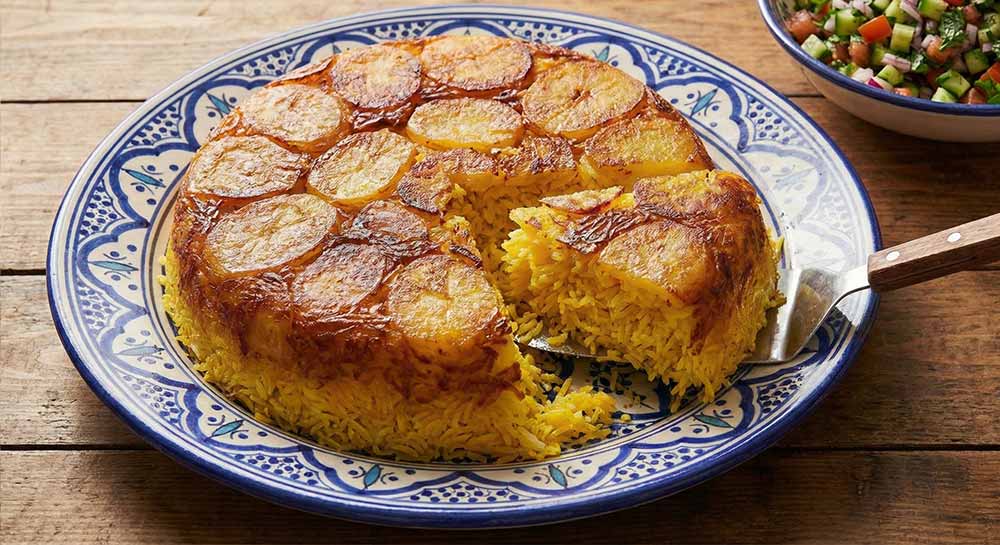
- Potato Tahdig (Tahdig-e Sibzamini): Sliced potatoes that become thick, golden “fries” at the bottom. This is often a favorite among our international guests at SAFFRON.
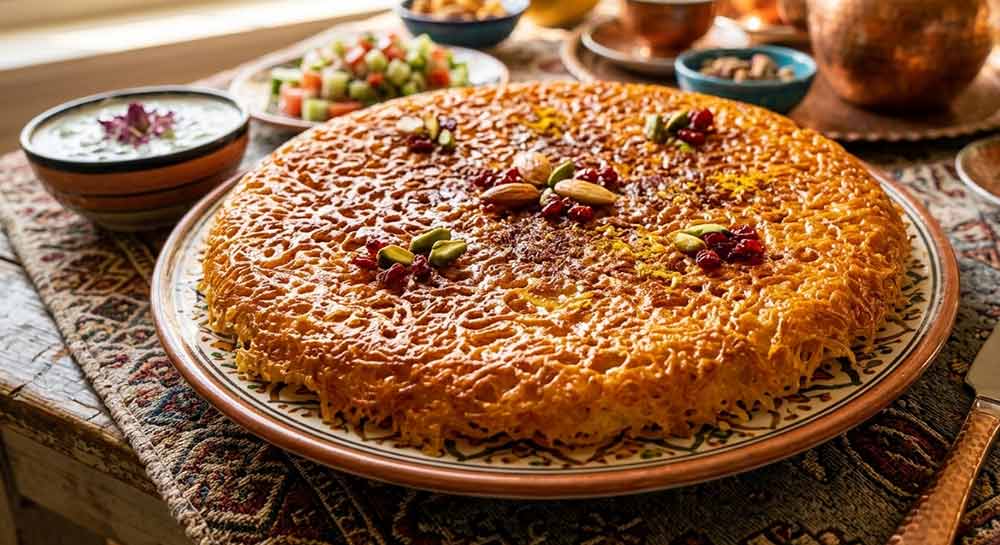
- Saffron Rice Tahdig: The classic version where rice is mixed with yogurt, egg yolk, and plenty of saffron to create a thick, cake-like crust (similar to Tahchin).
- Lettuce Tahdig: A surprising traditional variation where large lettuce leaves are used, creating a unique, nutty, and slightly healthier crunch.
3. The “War” of Politeness: The Culture of Sharing Tahdig
Iranians are world-famous for their hospitality and “Ta’arof” (a complex system of extreme politeness). However, there is one major, unspoken exception to this rule: Persian Tahdig.
When the platter of golden, broken shards of Persian Tahdig is placed on the table, a temporary “ceasefire” on Ta’arof rules is declared. Everyone knows that while the rice is plentiful, the Persian Tahdig is limited in quantity but incredibly high in demand. While hosts will always offer the best pieces to guests first, in family gatherings, there is a legendary, fast-paced competition to snag the crispiest bits. It’s a “war” where everyone smiles, but no one wants to leave the table without their fair share of the gold.
4. The Perfect Vessel for Persian Stews
One cannot talk about Persian Tahdig without mentioning its role as the perfect companion to stews (Khoresht). Whether it’s the herb-rich Ghormeh Sabzi or the tangy Gheimeh, the crispy texture of the Tahdig acts as a vessel, soaking up the savory juices of the stew while maintaining its satisfying crunch. This contrast between the soft, slow-cooked stew and the brittle, fried rice is what defines the Iranian dining experience.
Conclusion: An Experience to Hear and Taste
The next time you order a Chelow Kabab or a traditional stew at SAFFRON, don’t just focus on the main dish. Pay close attention to the art of the rice served beside it. If you are lucky enough to find a piece of golden Persian Tahdig on the side of your plate, know that we have shared the very heart and soul of the Persian kitchen with you. It is a bite of history, a crunch of tradition, and a flavor you will never forget.