

In the vast and intricate global spectrum of flavors, traditional Iranian gastronomy reserves a highly revered space for a very specific taste profile. This is the masterful intersection of tart and sweet, known in the Persian language as “malas”.
The undisputed champion of this complex, mouth-watering flavor on the Iranian dining table is a tiny, brilliantly red, and sharply tart berry. This essential culinary ingredient is Persian Zereshk.
Grown primarily in the arid, high-altitude eastern provinces of Iran, particularly in the Khorasan region, this ancient fruit is far more than a simple decorative garnish. It is a defining symbol of visual elegance and culinary intelligence in Persian food culture, offering a unique sensory experience that cannot be replicated by any other ingredient in the world.
The Historical Roots of the Tart Ruby
The rich history of Persian Zereshk spans thousands of years across the Middle East. While various species of barberry bushes grow wild in many parts of the world, including Europe and North America, Iran is the largest producer of the cultivated, seedless variety specifically bred for culinary excellence.
The native bushes that bear these delicate berries are notoriously covered in sharp, dense thorns. This makes the annual harvest a labor-intensive process that demands immense patience and skill from local farmers.
In early autumn, farmers carefully cut the fruit-laden branches and hang them in specialized dark, well-ventilated drying halls. This slow, natural drying process removes the moisture but perfectly preserves the vibrant crimson color and the intensely acidic flavor.
Medicinally, the plant has been utilized in traditional medicine for centuries. It is highly valued to purify the blood, support liver function, and soothe inflammation, primarily thanks to its exceptionally high levels of Vitamin C and natural antioxidants.
The Delicate Alchemy of the Sauté Pan
Raw, dried barberries are almost never used directly in traditional cooking without proper preparation. To awaken their true flavor and stunning visual appeal, Iranian home cooks put them through a brief, yet highly sensitive, blooming process.
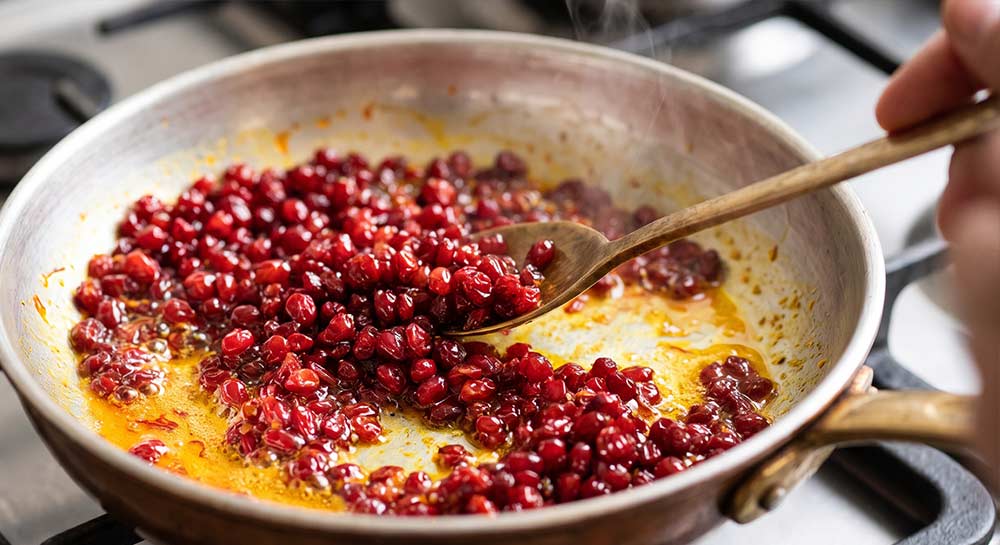
Persian Zereshk is gently sautéed over very low heat with a generous pat of fresh butter and a spoonful of sugar to balance the natural astringency. A splash of liquid blooming saffron is added at the end.
Because the berries contain natural sugars and have thin skins, they can easily burn and turn bitterly dark in a matter of seconds if the pan is too hot.
When executed correctly, this magical combination plumps the dry, shriveled berries. It turns them into glistening, aromatic jewels ready to crown the finest dishes. This technique requires a watchful eye and a deep understanding of temperature control.
Expanding the Culinary Horizon Beyond Rice
While it is most famous as a rice topping, the versatility of Persian Zereshk extends far beyond a single application. It is a crucial ingredient in Kuku Sabzi, a thick and herbaceous Persian frittata, where the tartness of the berries cuts through the dense richness of the fried greens and eggs.
It is also found hidden within the layers of Tahchin, a savory baked rice cake bound with yogurt and egg yolks. Here, it provides sudden bursts of acidity that balance the creamy texture of the dish.
Chefs also incorporate these rubies into rich poultry stuffings and heavy meat stews. This introduces a refreshing, bright contrast that elevates the entire flavor profile.
Zereshk Polo ba Morgh: The Ultimate Culinary Canvas
The absolute pinnacle of this red ruby’s culinary journey is showcased in one of Iran’s most luxurious, nostalgic, and universally beloved festive dishes. This is Zereshk Polo ba Morgh, which translates to Barberry Rice with Chicken.
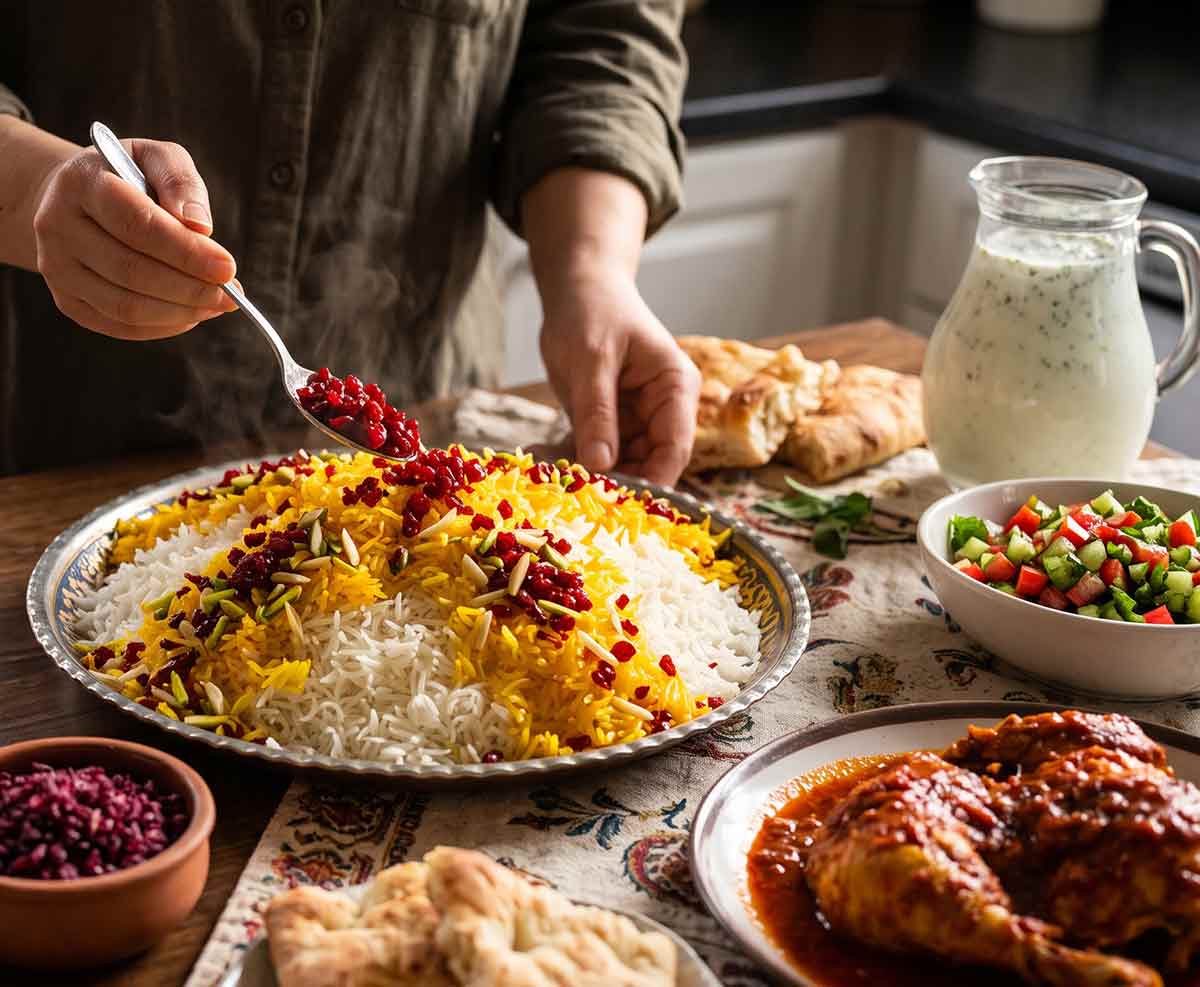
In this iconic meal, Persian Zereshk serves as both the primary flavor balancer and the lead visual designer. The striking contrast of the bright red berries against the fluffy snow-white basmati rice and the golden saffron-infused grains creates an absolute visual masterpiece.
When paired with tender, slow-cooked chicken bathed in a rich, savory tomato and saffron broth, every single bite delivers a flawless harmony. You experience the subtle tartness of the berries, the slight sweetness of the caramelized sugar, the floral aroma of the saffron, and the rich depth of the butter.
This dish is the ultimate expression of culinary aesthetics, proving that true flavor engineering engages all the senses simultaneously.
To experience this unforgettable, legendary taste, you can try the signature Zereshk Polo of SAFFRON Restaurant at any of our Grab & Go locations.