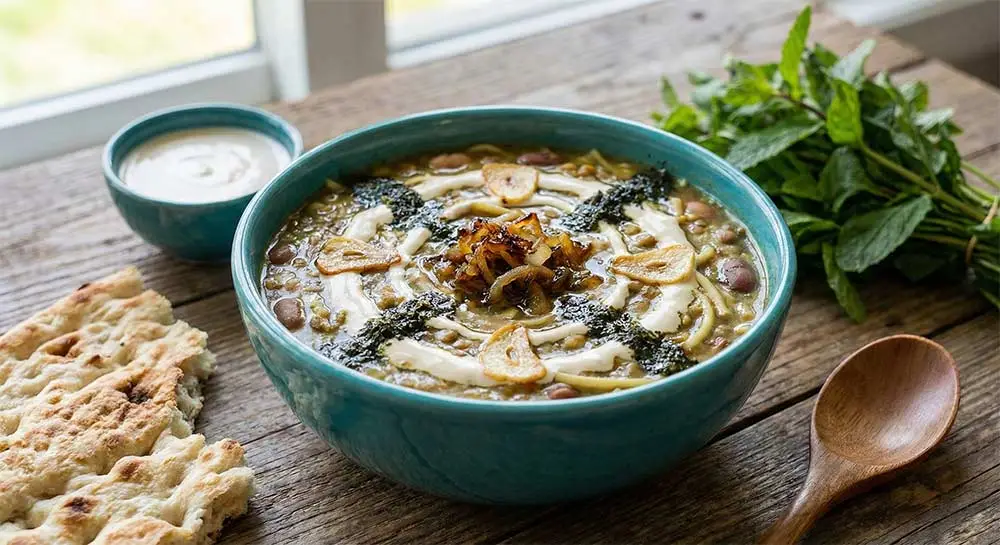
Persian Ash Soup is far more than just a warm, comforting bowl of food; it is a profound symbol of community, nature, and spiritual heritage. To truly understand its monumental importance, one looks no further than the Persian language itself. In Iran, the word for a chef is Ash-paz (literally, the “Ash-cooker”), and the word for a kitchen is Ash-paz-khaneh (the “house of Ash”). This linguistic connection implies that mastering this specific dish is considered the ultimate foundation of all Iranian culinary arts.
In this article, we will dive deep into the aromatic world of Persian Ash Soup, exploring how a simple blend of herbs, legumes, and grains represents the very soul of Iranian hospitality at SAFFRON.
1. A Language of Love, Connection, and Farewell
In Iranian culture, Persian Ash Soup is frequently used to express deep human emotions, milestones, and social bonds. It is a dish that accompanies people through all stages of life.
- Ash-e Posht-e Pa (The Farewell Soup): This beautiful tradition occurs when a loved one sets off on a long journey. A few days after their departure, the family gathers to cook this unique variety of Persian Ash Soup. The legumes in the recipe symbolize strength for the traveler, while the long, unbroken noodles (Reshteh) represent a collective wish for a long life and a smooth, safe path home.
- Ash-e Nazri (The Votive Soup): This represents the ultimate expression of collective spirit and community charity. Cooked in massive, oversized pots over open fires in the streets, neighbors come together to stir the soup while making personal prayers. It is then distributed completely free of charge to neighbors, friends, and the underprivileged, serving as a powerful ritual of generosity and togetherness.
2. A Seasonal Calendar of Regional Flavors
Because Iran enjoys a remarkably diverse climate with distinct seasons, almost every province and special occasion boasts its own unique signature version of this comforting dish.
- Ash-e Reshteh: The undisputed star of all Persian Ash Soup varieties. It is traditionally prepared and served during the Persian New Year (Nowruz), outdoor spring picnics, and cozy winter family reunions. It features a heavy base of spinach, cilantro, parsley, mixed beans, and noodles.
- Ash-e Doogh: A refreshing, deliciously tangy, yogurt-based version originating from the cold, mountainous northern regions like Azerbaijan and Kurdistan. This aromatic, herb-infused Persian Ash Soup is packed with fresh wild herbs and tiny meatballs, offering a completely different flavor profile.
- Ash-e Sholeh Qalamkar: A royal, incredibly thick, and hearty stew dating back to the Qajar dynasty. It combines multiple types of meat and lentils, slowly simmered until the texture becomes wonderfully creamy and pull-apart tender.
3. Ancient Nutritional Wisdom and Medicine
Ancient Persian culinary pioneers designed Persian Ash Soup to be a nutritionally complete, one-pot meal. It serves as a powerhouse of dietary fiber, plant-based proteins, essential vitamins, and minerals.
Furthermore, the creation of this dish is deeply intertwined with traditional Persian medicine (Tebb-e Sonnati), which focuses on balancing “warm” and “cold” elements within the body. The cold nature of the legumes and whey is perfectly neutralized by the warm nature of the iconic toppings. A proper bowl is always artistically garnished with Kashk (fermented, savory whey), Piyaz Dagh (crispy caramelized onions), fried garlic, and Na’na Dagh (sizzling dried mint oil), ensuring a harmonious digestion.
4. The Deep Influence on Persian Proverbs
The cultural impact of Persian Ash Soup is so profound that it has literally shaped ancient Iranian wisdom, filling the language with colorful daily proverbs and idioms:
- “It’s not such a mouth-burning Ash!” This common phrase is used when someone is overhyping a situation, meaning: It’s really not that big of a deal.
- “Being the chickpea in every Ash.” This humorous idiom describes an overly nosy person who constantly meddles in everyone else’s private business.
Conclusion: A Sensory Experience of the Soul
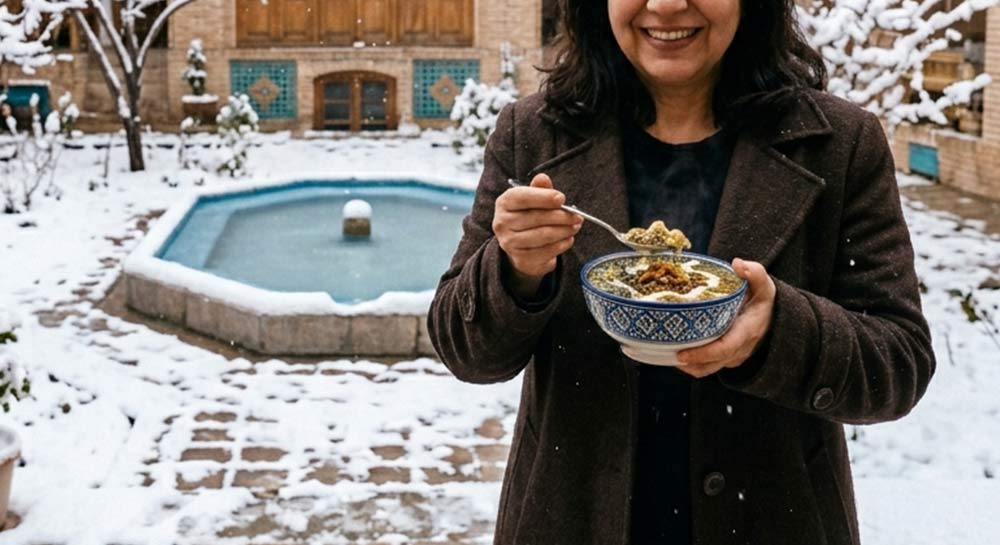
In Iran, enjoying this dish is never a solitary act; it is a shared sensory ritual. When we sit around a steaming bowl garnished with golden onions and emerald-green mint oil, we are tasting centuries of history, deep friendships, and the very essence of hospitality.
The next time you visit SAFFRON, don’t miss the chance to experience an authentic bowl of Persian Ash Soup. It is a culinary journey that will warm your heart and introduce you to the true flavor of Iranian tradition!