More Than Food, A Sacred Blessing
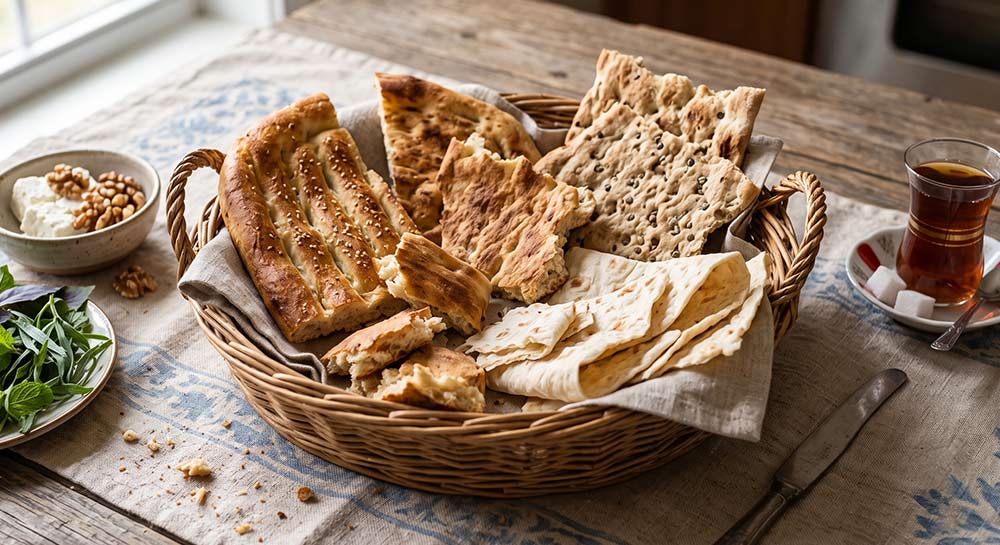
When exploring Middle Eastern cuisine, Persian Breads offer an experience that goes far beyond a simple side dish. If you want to truly understand the soul of this culinary art, you must look past the simmering stews and sizzling kebabs and head straight to the beating heart of traditional neighborhoods: The Bakery (Nanvaei)! In Persian culture, bread (Nan) is never just a source of carbohydrates. It acts as an edible spoon, a plate for serving, a canvas for colorful wraps, and above all, it is the ultimate symbol of “Barakat” (blessing) and respect on the dining table. The earthy scent of yeast, the crackle of burning wood, and the intense heat of traditional clay tandoors are ingrained in the historical memory of every Iranian. Let’s explore four major masterpieces in the world of Persian Breads, each with its own unique personality.
1. Sangak: The Undisputed King of the Stone Oven
If Persian Breads were a kingdom, “Sangak” would undoubtedly sit on the throne. The name itself literally translates to “little stones,” which hints at its ancient baking method. Sangak is a whole-wheat sourdough flatbread. The baker (Shater) skillfully stretches a highly hydrated, sticky dough onto a wooden paddle and slaps it directly onto a bed of searing hot river stones inside a dome oven. The result? A remarkably long, triangular bread with a soft, slightly chewy interior and a crispy, blistered crust indented by the hot stones. Sangak is the ultimate companion for juicy Persian kebabs and rich, slow-cooked broths like “Dizi.”
2. Barbari: The Golden, Crispy Breakfast Essential
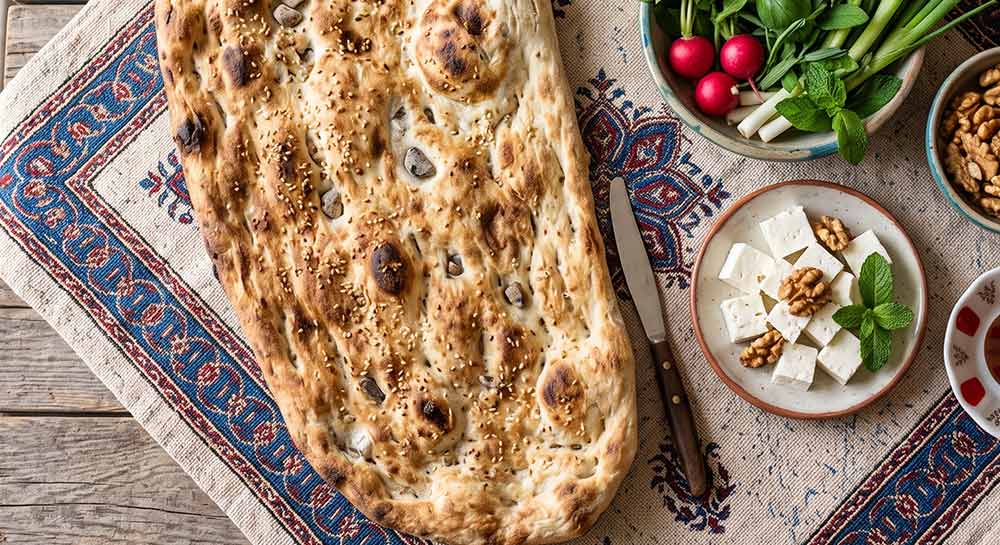
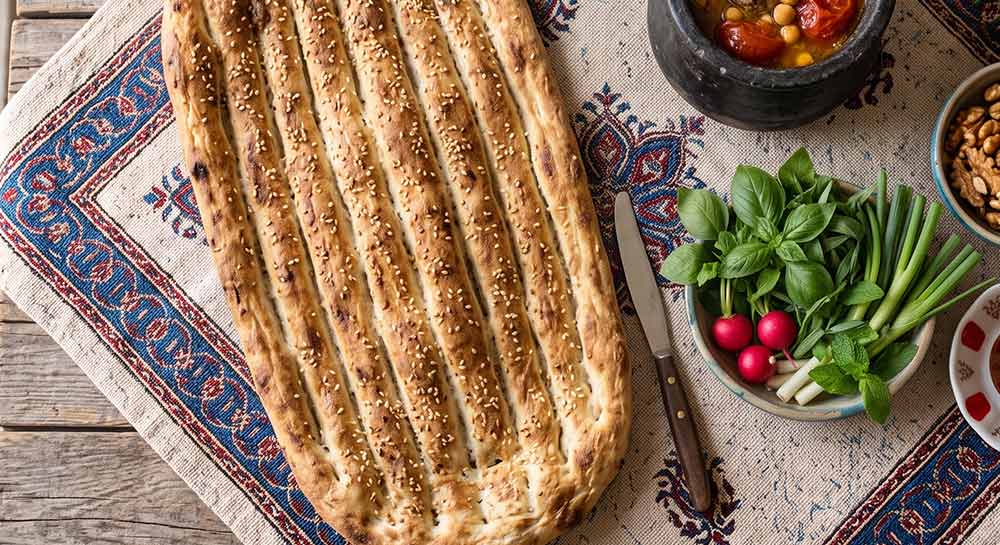
Among all Persian Breads, if you crave the thickest, crunchiest, and most appetizing crust, Barbari is the one for you. This thick, oval-shaped, and airy flatbread originally hails from northeastern Iran.
The secret behind Barbari’s stunning golden-brown crust lies in a special glaze. This mixture of flour and water is brushed over the dough before baking.
The baker uses his fingers to press deep ridges into the dough, showering it with sesame seeds. Tearing a piece of hot Barbari releases a fragrant cloud of steam, making it perfect for breakfast.
3. Lavash: The Paper-Thin Canvas
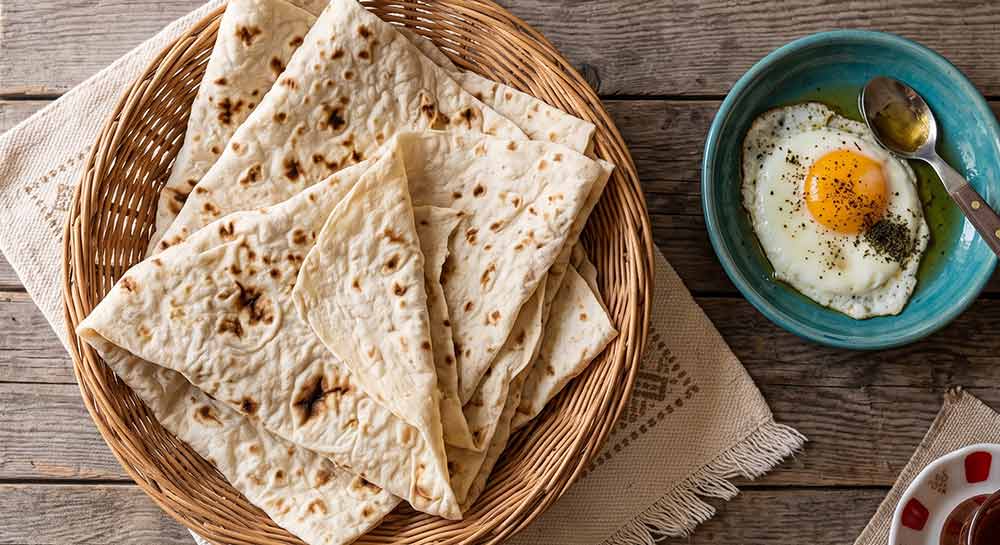
Lavash is the thinnest, softest, and most widely consumed bread in Iran and the Caucasus region. Often as thin as a sheet of paper, it bakes in mere seconds when slapped against the fiery walls of a clay oven. Because of its incredible flexibility, Lavash is the absolute best choice for making “Loghmeh” (wraps). Iranians love to place a piece of Lavash in their palm, fill it with fresh aromatic herbs, cheese, walnuts, or even a skewer of Kebab, roll it up tightly, and eat it in one go. While it dries out quickly, a few drops of water instantly restore its pillowy softness!
4. Taftoon: The Familiar Scent of Traditional Homes
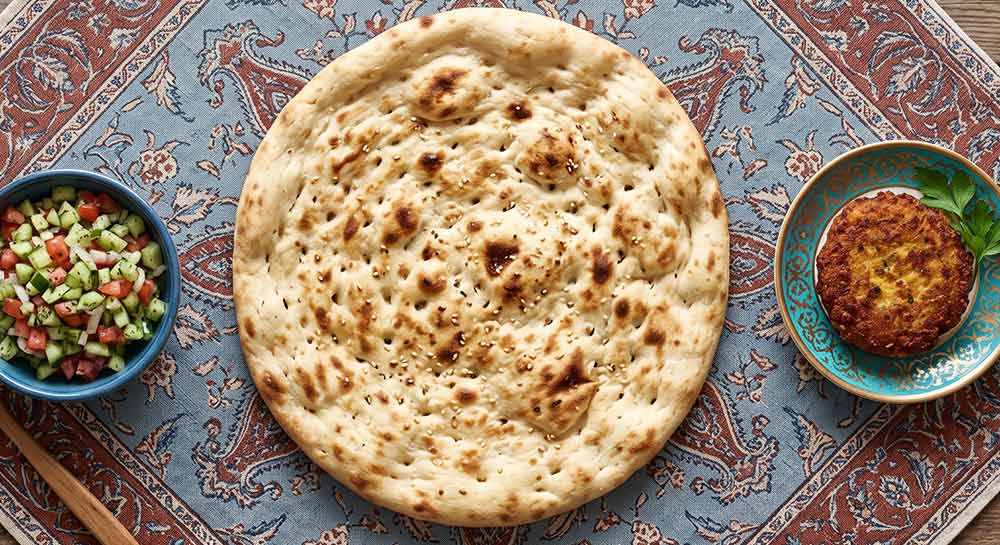
Taftoon is a round, blistered flatbread that is slightly thicker than Lavash but thinner than Barbari. Not too long ago, almost every traditional Iranian home had a small clay tandoor in the courtyard specifically for baking Taftoon. Usually made from white flour, the dough is repeatedly pierced with a special tool to prevent it from puffing up like a balloon in the oven. With its soft and slightly chewy texture, Taftoon is the perfect vehicle for scooping up warm dips, eggplants, and quick meals.
A Magic That Must Be Tasted Warm
The true magic of Persian bread lies in its absolute freshness. Standing in line at a local bakery on a crisp morning, receiving a scorching hot bread straight from the tandoor, and tearing off a crispy corner to eat on the walk home is an unparalleled sensory experience. If you ever find yourself at a Persian feast, remember: the celebration begins not with the main course, but with the very first bite of hot, fresh bread.